Showroom cleaning services provide janitorial staff who work in shifts to keep the display floor, glass walls, stone floors, sales counters and customer restrooms clean throughout opening hours. Unlike an office, a showroom sells from the space itself, so dust on the glass or water marks on the floor around a car are the first things a customer notices. In our experience managing janitorial contracts in Ho Chi Minh City and southern Vietnam, the real risk for a showroom appears months into the contract, when staff change and new cleaners have not been told which products they may touch and which areas they should only clean around.
BPG Group is ISO 9001:2015 certified and received The Best of Vietnam 2024 award. Our on-site cleaning staff clock in and out electronically, so clients can see exactly who worked each shift and how often each task was done.
Daily showroom janitorial services vs one-off deep cleaning
Daily janitorial service means staff working regular shifts to keep the showroom clean every day, while a deep clean is a one-off job for the items that daily staff do not cover. Many showroom managers ask for one quote covering both, and the contract then fails to say which tasks belong to the daily shift. The table below helps admin teams separate the two before they talk to contractors.
| Criteria | Daily showroom janitorial service | Deep cleaning or post-construction cleaning |
| How it works | Staff work in shifts that follow the showroom’s opening hours | A cleaning crew works as a one-off job, usually after hours or on a closed day |
| Typical tasks | Mopping floors, cleaning inside glass, wiping counters and shelves, customer restrooms, waste collection, spot cleaning | Removing construction dust, paint and adhesive; polishing stone floors; deep cleaning rarely touched areas |
| How it is priced | Number of staff and working arrangement (hourly or full shift) | Itemised quote per cleaning item after a site survey |
| How it is checked | Electronic time records per shift, a supervisor in charge, regular performance reviews | Photo report for each item and a handover record signed by both sides |
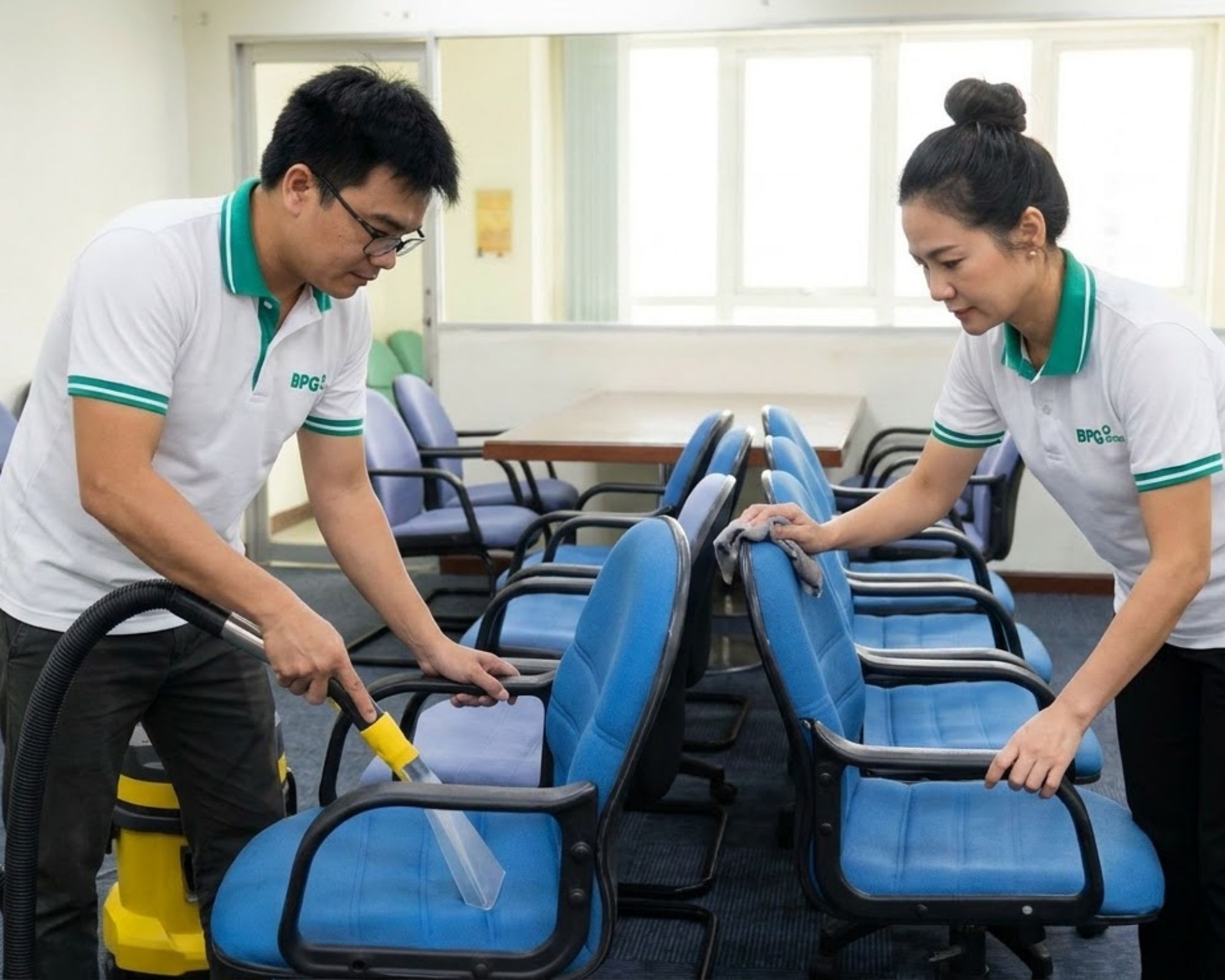
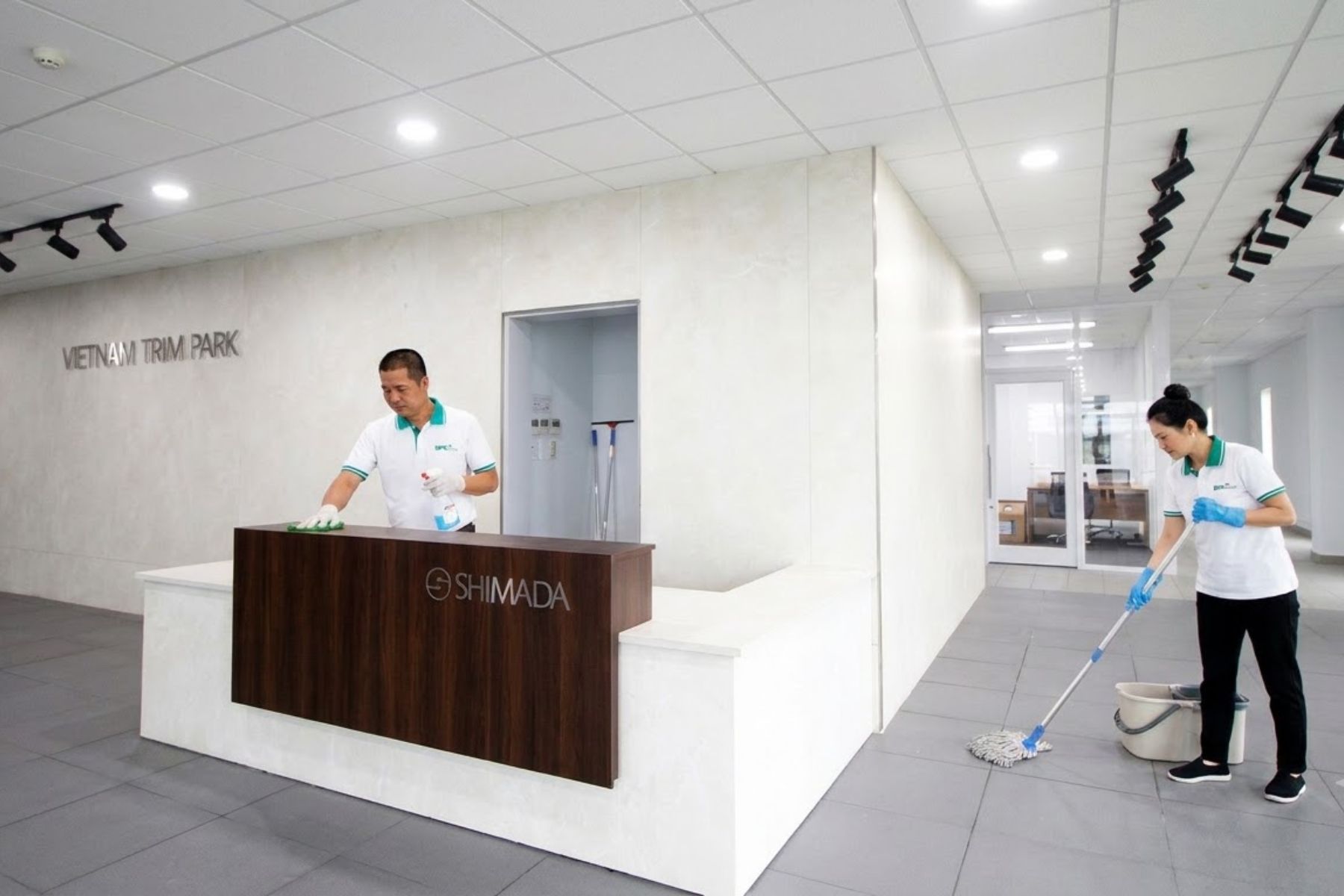
The photo below shows BPG staff on routine work in a display area, the kind of task that belongs to the daily janitorial shift.

Many showrooms need both services at once: a deep clean gets the space ready to receive customers, and daily janitorial staff keep it that way. Once the two are separated, the next step is to define what the daily shift covers on the display floor.
4 groups of janitorial tasks in the showroom display area
Daily janitorial work in a showroom display area falls into four groups: floors and customer walkways, glass, the area around display products, and shelves, counters and furniture. This is the part of the showroom customers see most, so it comes first on the checklist and in the hour before opening. The infographic below sums up the four groups in the order they are done during a shift.
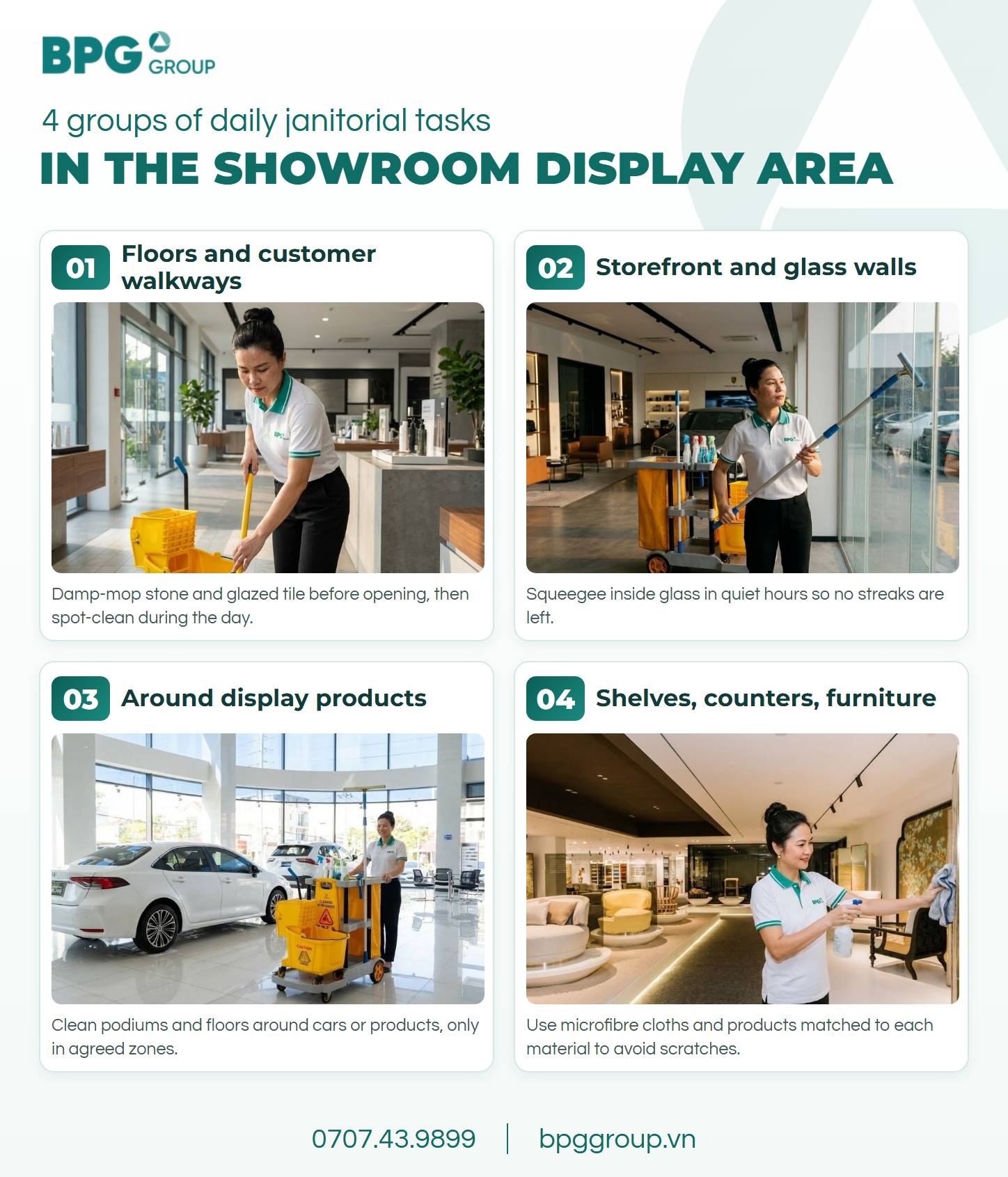
- Floors and customer walkways: staff damp-mop stone or glazed tile floors before opening, then only spot-clean during the day and place a wet floor sign where they are working.
- Storefront and glass walls: inside glass is squeegeed when few customers are around, because streaks show clearly when the afternoon sun hits the glass.
- Around display products: staff clean podiums and floors around cars or products only in the zones agreed with the showroom, and do not wipe car bodies or product surfaces unless they have been told to.
- Shelves, counters and display furniture: wood, plated metal and stone surfaces are wiped with microfibre cloths and products suited to each material, to avoid scratching or dulling the finish.

These four task groups cover only part of the site at car and motorbike dealerships that also have a service workshop and a parts store. Staffing should therefore be planned zone by zone rather than with one shared checklist.
Assigning showroom cleaning staff by zone
Large showrooms should assign janitorial staff by functional zone, with each zone having its own tasks, cleaning products and time slots. A car dealership often has a display floor, a customer lounge, a service workshop, a parts store and outdoor areas on the same site, and each zone has very different levels of dirt and appearance standards. The table below is a starting point that admin teams can use when discussing staffing with a contractor.
| Zone | Main tasks | Suggested timing |
| Display floor | Floors, inside glass, display podiums, shelves and counters | Thorough clean before opening, spot cleaning during the day |
| Customer lounge and offices | Sales desks, meeting rooms, pantry, customer restrooms | Restrooms checked several times a day, depending on customer traffic |
| Service workshop (if any) | Walkways between repair bays, oil and grease on floors, technicians’ restrooms | Follows workshop shifts, oil spills handled as soon as they are found |
| Parts store | Aisles, rack bases, dust control around stored parts | Planned around deliveries so forklifts and trolleys are not blocked |
| Outdoor areas | Entrance gate, internal roads, customer car park | Start of the morning shift, before the first customer arrives |
| Staff canteen and changing rooms | Tables, sinks, bins, rest area floors | After lunch and at the end of the shift |
Kärcher’s guidance for car dealerships also treats the showroom, workshop and customer areas separately, noting that oily workshop floors are a slip hazard and need equipment that handles grease and tyre marks (Kärcher, car dealerships). A showroom with only a display floor and offices can cut the table down to the first two rows. A site with a workshop and parts store should be surveyed to set staff numbers per zone, rather than asking one person to cover both the display floor and an oily workshop.
Cleaning near high-value products and display materials
When cleaning near high-value products such as cars, premium furniture or electronics, janitorial staff must know exactly which items they may touch and which they should only clean around. Showrooms use toughened glass, polished stone, plated metal and lacquered wood, and each material needs its own products and tools. Mistakes rarely come from lack of effort. They usually come from untrained handling, such as using a coarse cloth on plated metal or spraying glass cleaner onto a display car.
- Agree a touch-zone map before starting: the showroom should mark which products cleaners may not touch, and which team is responsible for wiping car bodies and screens.
- Match cleaning products to materials: stone floors need a neutral cleaner, plated metal needs microfibre cloths and glass needs a streak-free solution, so surfaces do not dull or scratch after months of repeated wiping.
- Retrain whenever staff change: a new cleaner should be shown the touch zones and the showroom’s routine before working alone, because handover periods are when handling mistakes are most likely.
- Set out responsibility for damage in the contract: both sides should agree how damage during cleaning will be handled when they sign, rather than negotiating after something happens.

Most of these points depend on timing, because the same task can be safe before opening but disruptive to customers during peak hours.
Scheduling showroom cleaning around opening hours
Thorough cleaning in a showroom should be done before opening or after closing, while during opening hours staff only carry out light upkeep. This keeps the display floor clean and tidy whenever customers are walking around, and avoids noise, chemical smells and wet floor signs during sales conversations.
- Before opening: mop the whole display floor, clean inside glass, wipe podiums and shelves, check customer restrooms and the entrance area.
- During opening hours: handle spills and marks as they appear, check customer restrooms according to traffic, and collect waste at sales desks and waiting areas.
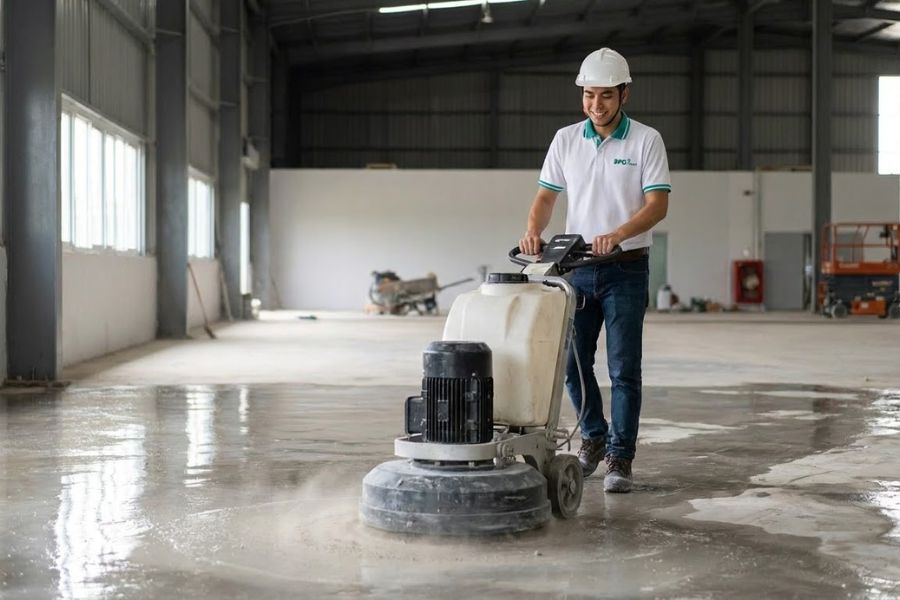
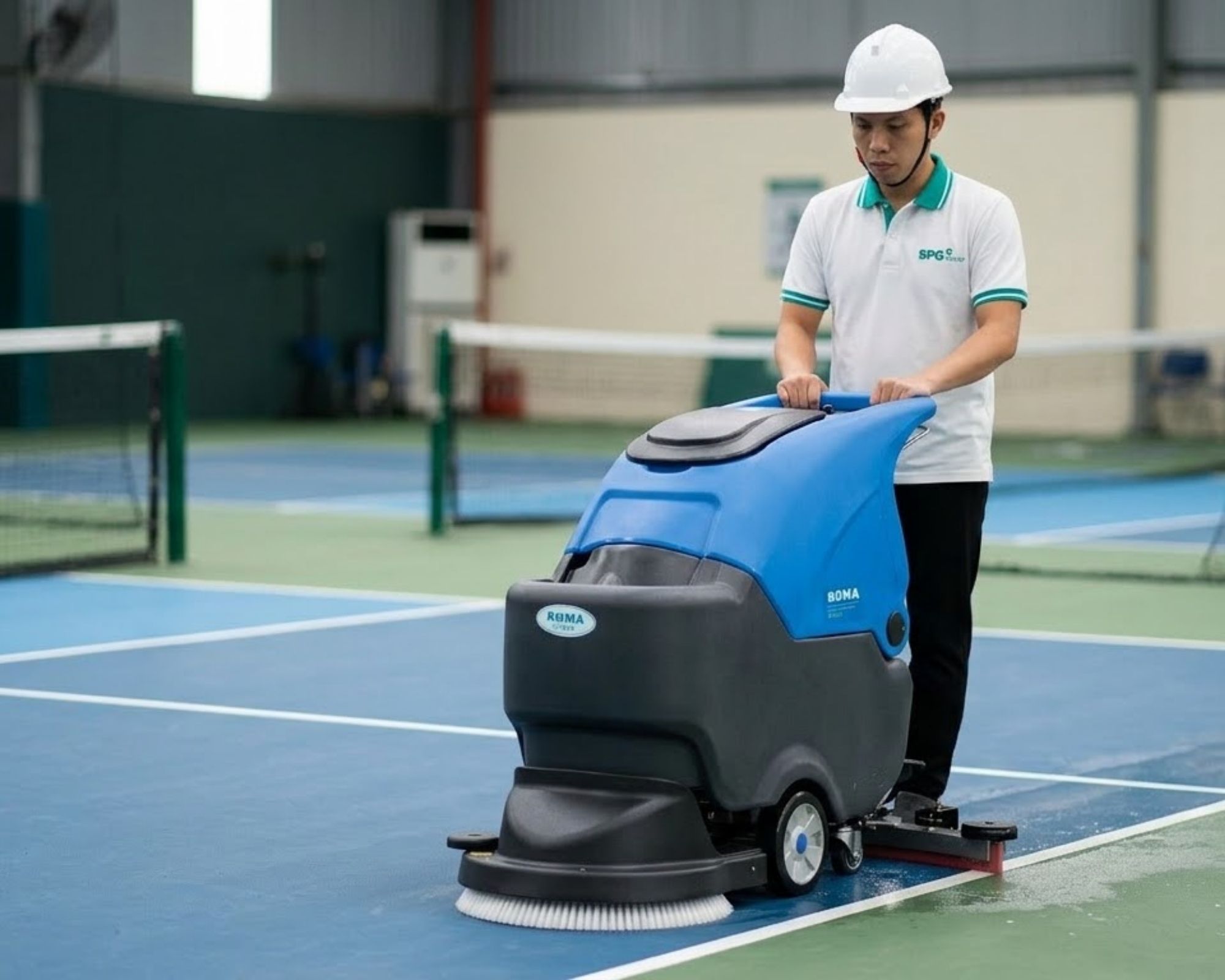
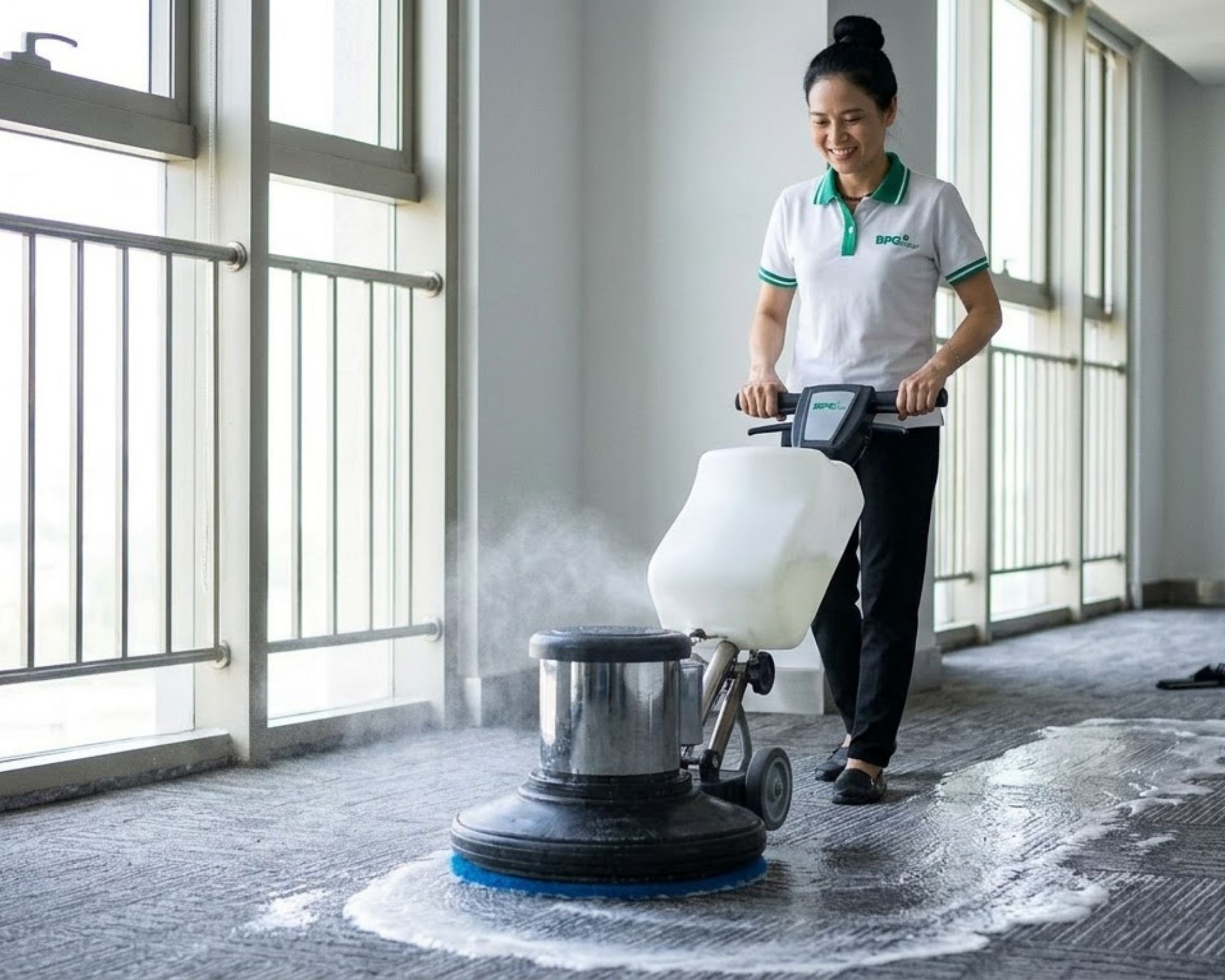
- After closing or on closed days: machine work such as large-area floor scrubbing, re-polishing stone floors or one-off deep cleaning.
Showrooms that sell most on weekends and public holidays often need longer shifts or extra staff on those days. Work outside normal hours, at night or on public holidays may carry a labour surcharge, which is stated clearly in the quote so the showroom can budget ahead.
Post-construction cleaning and periodic deep cleaning for showrooms
A newly built or refurbished showroom needs a post-construction clean before opening day, and can then book periodic deep cleaning for items outside the daily janitorial shift. Construction dust, paint and adhesive on glass, floors and aluminium frames need machines and specialist products, so they cannot be left to daily cleaning staff.
When a showroom needs post-construction cleaning
Post-construction cleaning should be booked well before opening day, because the crew needs time to work through each item and both sides need time to check the result before customers arrive. For post-construction cleaning, BPG surveys the site free of charge, sends an itemised quote, then provides a photo report for each item and signs a handover record with the client when the work is done.
Periodic deep cleaning while the showroom is open
Once open, many showrooms schedule periodic deep cleaning for stone floors that have lost their shine, display lighting and rarely touched corners. Dull stone floors can be restored by stone floor polishing, usually on a day the showroom is closed, because it needs machines and drying time.
With the scope of daily janitorial work and one-off deep cleaning clear, the next question most managers ask is what drives the cost.
What affects the cost of showroom cleaning services
The cost of showroom janitorial services is based on the number of staff and the working arrangement, not on floor area. Staff numbers in turn depend on the number of zones, opening hours and customer traffic, so each showroom receives its own quote after a site survey. The table below lists the main factors so purchasing teams can prepare the right information before asking for a quote.
| Factor | Effect on the quote |
| Number of zones | A showroom with a service workshop and parts store usually needs more staff than one with only a display floor |
| Opening hours and customer traffic | A showroom open all day and busy at weekends needs full-shift staff or extra people on peak days |
| Working arrangement | A small showroom may only need hourly cleaners, while a large one usually needs staff on site full time |
| After hours, nights, public holidays | May carry a labour surcharge, stated clearly in the quote |
| One-off jobs | Post-construction cleaning and stone floor polishing are quoted separately per item, outside the daily janitorial contract |
The actual rate can only be set after a site survey, which is why BPG does not publish a single price for all showrooms. Contact us for a quote that matches your opening hours and the number of zones on your site.
How BPG keeps showroom janitorial quality steady month after month
BPG keeps showroom janitorial quality steady by selecting and training staff before deployment, assigning them by shift and zone under a supervisor, keeping backup staff available and recording attendance electronically for every shift. These steps address the most common worry of showroom managers: standards slipping when cleaners change or call in sick.
- Selection and training before deployment: staff are chosen for experience, conduct, health and fit with the workplace, then trained on procedures, cleaning products, equipment, work safety and the client’s site rules.
- Assignment by shift and zone: each cleaner covers a defined zone under a supervisor who oversees the work directly, so the display floor is not left empty when another zone gets busy.
- Backup staff: when a cleaner is absent at short notice, BPG has backup staff ready so the service continues, instead of leaving the showroom to manage on its own.
- Electronic attendance and regular reviews: the showroom can see attendance and task frequency for each shift, and work results and client feedback are reviewed regularly.

Under BPG’s “one point of contact, many services” model, a showroom deals with one contractor for daily janitorial work, post-construction cleaning and deep cleaning. Our daily janitorial services page explains how we staff other sites, and showrooms inside shopping malls can also see how we work for retail and shopping centres.

Frequently asked questions
Does a showroom janitorial contract include post-construction cleaning?
No. Daily janitorial service and post-construction cleaning differ in how the work is organised and how it is priced. Janitorial service is priced by staff numbers and working arrangement, while post-construction cleaning is quoted item by item. If you need both, ask the contractor to quote each part separately from the start.
What happens if a cleaner is absent at short notice?
BPG keeps backup staff available so the service continues when a cleaner is absent. The replacement works to the same shift and zone, under the same supervisor. We recommend that the contract states how replacements are arranged and how new cleaners are briefed on the touch zones.
Do your cleaners wipe the display cars in a car showroom?
This should be agreed in the touch-zone map before work starts, because many dealerships give car care to a separate team. Daily janitorial staff normally look after floors, podiums, glass and the area around the cars. If you want cleaners to wipe car bodies as well, the scope, tools and products should be written into the contract.
Is there a surcharge for work outside opening hours or on public holidays?
There may be. Work outside normal hours, at night or on public holidays may carry a labour surcharge, which is stated clearly in the quote. Showrooms that are busiest at weekends should mention their peak days during the survey so staff numbers are set correctly.
Can one contractor clean both the showroom and the service workshop?
Yes, as long as each zone has its own staff, cleaning products and routine. Because the workshop has oil and grease, the same person should not clean the workshop and the display floor in the same shift. Using one contractor makes quality and cost easier to manage.
Get a showroom cleaning survey and quote in Vietnam
A showroom works best when daily janitorial work is clearly separated from one-off deep cleaning, and staff are assigned by zone and opening hours so the display floor is always ready for customers. BPG Group surveys your site before quoting, proposes staff numbers and a checklist for each zone, then sends a quote that fits your operating schedule. Call 0707 43 9899 or email info@bpggroup.vn to request a showroom cleaning quote in Ho Chi Minh City and southern Vietnam.